Bitcoin explained from scratch — no jargon, no assumed knowledge — Photo: Unsplash
What is Bitcoin? A Complete Beginner's Guide for 2026
From "what even is this?" to your first Bitcoin purchase — everything a beginner actually needs to know in 2026.
Bitcoin is digital money that no government controls, no bank can freeze, and no one can create more of beyond its fixed maximum of 21 million coins. That's the one-sentence explanation. Everything else — the technology, the history, the price, the wallets, the exchanges — is detail built on top of that core idea.
How Bitcoin Works — The Simple Version
Bitcoin Key Facts — June 2026
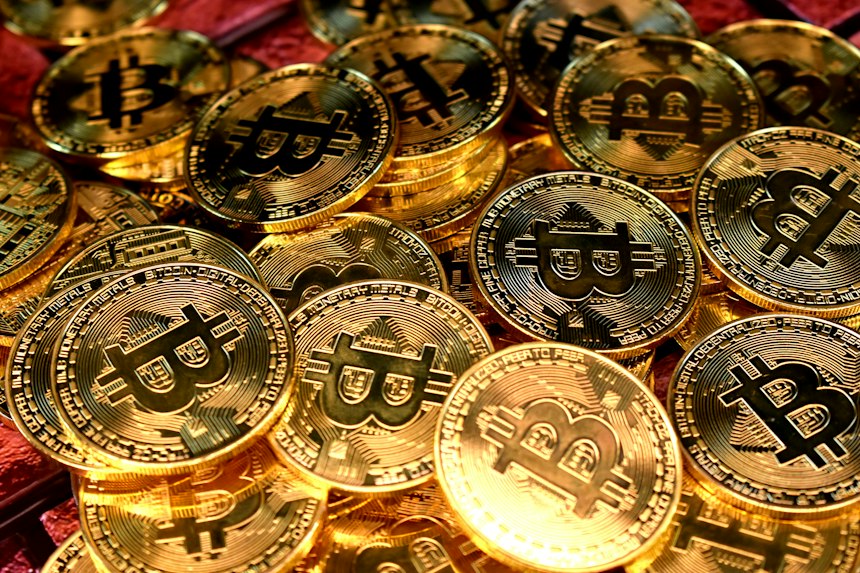
Hardware wallets (Ledger, Trezor) are the safest way to store Bitcoin you're not actively trading — Photo: Unsplash
How to Buy Bitcoin as a Beginner in 2026 — Step by Step
Use Coinbase (most beginner-friendly, US-regulated), Binance (largest globally, more options), or Kraken (strong security reputation). All require ID verification (passport or driving licence). This is standard KYC — required by law in most countries.
Sign up with email, enable two-factor authentication (2FA — a must, not optional), and upload your ID. Verification typically takes minutes to a few hours. Never skip 2FA — it's what prevents account hacks.
Connect a bank account (ACH transfer in US, bank transfer in UK/EU) or use a debit card. Bank transfers have lower fees (typically 0.5-1.5%) versus debit cards (2.5-3.99%). Start with a small amount — $50-100 — to get comfortable with the process before deploying larger amounts.
Search for "BTC" or "Bitcoin," enter the dollar amount you want to spend (you can buy fractions — $50 buys you ~0.00082 BTC at $61K), and confirm your purchase. You now own Bitcoin — it appears in your exchange wallet immediately.
For amounts over $1,000, consider moving Bitcoin to a hardware wallet (Ledger or Trezor, both ~$70-80). This means your Bitcoin is stored on a device you control — not on the exchange's servers. "Not your keys, not your coins." Exchange failures (like FTX in 2022) can cost customers everything.
📊 Bitcoin Price History — The Big Picture
Bitcoin Glossary — 20 Terms Every Beginner Must Know
The public ledger where every Bitcoin transaction ever made is permanently recorded. Anyone can verify any transaction — no trust required.
Software or hardware that stores your Bitcoin private keys. Think of it as your Bitcoin bank account that only you control.
A secret password (256-bit number) that proves you own your Bitcoin. Lose it = lose your Bitcoin forever. Never share it with anyone.
12 or 24 words that back up your wallet. Write these on paper, store offline, never photograph or type into any website.
The process of using computers to validate Bitcoin transactions and add them to the blockchain. Miners earn Bitcoin as reward (3.125 BTC per block in 2026).
Every 4 years, the Bitcoin reward per block is cut in half. This controls inflation. Last halving: April 2024 (6.25 → 3.125 BTC). Next: ~2028.
The smallest unit of Bitcoin: 0.00000001 BTC. Named after Bitcoin's creator. At $61K, 1 SAT = $0.00061. You can buy 1,639 satoshis for $1.
Platform where you buy and sell Bitcoin (Coinbase, Binance, Kraken). Convenient but you don't truly "own" Bitcoin on an exchange — the exchange holds it for you.
Decentralized Finance — financial services (lending, trading) that run on blockchain without banks or companies. High potential, high risk for beginners.
Crypto slang for holding Bitcoin long-term regardless of price swings. Originated from a 2013 forum typo of "HOLD." Now means a long-term investment strategy.
❓ FAQ — Bitcoin for Beginners 2026
Bitcoin is digital money that exists only on the internet. No government or bank controls it. There will only ever be 21 million Bitcoins — making it scarcer than gold. You can send Bitcoin directly to anyone in the world in minutes, without a bank, at any time of day or night. Think of it as the internet's native currency.
Bitcoin is trading around $61,193 as of June 13, 2026. But you don't need to buy a whole Bitcoin — you can buy any fraction. $50 buys approximately 0.00082 BTC (82,000 satoshis). The price changes every second on exchanges worldwide. Always check CoinGecko or CoinMarketCap for the current live price.
The Bitcoin network itself has never been hacked in 15+ years of operation. The risks are: (1) Price volatility — Bitcoin fell 80% in 2022 before recovering, (2) Exchange hacks — always use regulated exchanges and hardware wallets for large amounts, (3) Scams — fake exchanges, fake customer support, phishing links. Use official apps only. The technology is safe; human error and fraud are the risks.
There is no minimum enforced by Bitcoin itself — you can own 1 satoshi (0.00000001 BTC). Most exchanges set their own minimums: Coinbase minimum is approximately $2, Binance is about $10-15. The practical starting point most beginners use is $50-100 to learn the process before committing more capital.
For beginners: Coinbase (most user-friendly, licensed in US/UK/EU), Binance (largest globally, most options), or Kraken (strong security). For Bitcoin ETF exposure without managing wallets: BlackRock's IBIT ETF through any stock brokerage. Always verify you're on the official website — fake exchange sites are a major scam vector.
A Bitcoin wallet stores your private keys — the cryptographic proof that you own specific Bitcoin. If you buy Bitcoin on Coinbase and leave it there, Coinbase holds the keys (not you). A personal wallet gives you true ownership. For small amounts and beginners: exchange storage is fine. For over $1,000 held long-term: a hardware wallet (Ledger, ~$80) is worth it.
The essential rules: (1) Enable two-factor authentication on every account, (2) Never share your seed phrase or private keys with anyone, ever, (3) Use a hardware wallet for large amounts, (4) Only use official exchange apps — verify URLs carefully before logging in, (5) Never respond to "Bitcoin support" contacts on social media or by email — they are always scams.
In most countries, yes. In the US, UK, Australia, and EU: Bitcoin is taxed as a capital asset. Selling Bitcoin for a profit triggers capital gains tax. Buying and holding ("HODLing") is not a taxable event. Using Bitcoin to buy goods is taxable. Track every transaction from day one — tools like Koinly or CoinTracker make this manageable. Consult a tax advisor for your specific jurisdiction.
A Bitcoin ETF (Exchange-Traded Fund) is a stock market product that tracks Bitcoin's price. You buy shares through a regular brokerage account like any stock — no wallets, no exchanges, no private keys. BlackRock's IBIT and Fidelity's FBTC are the largest. The tradeoff: you don't own actual Bitcoin, there are small annual fees (0.25%), and you can only trade during stock market hours.
Several factors: (1) Supply is fixed (21M max) but demand fluctuates based on news, regulation, and macro events. (2) The market is smaller than stocks — a $1B trade moves Bitcoin price more than it moves Apple stock. (3) 24/7 trading globally — no closing time to "reset" sentiment. (4) Leverage — many traders use borrowed money which amplifies moves in both directions. (5) News sensitivity — regulation, ETF approvals, and macro events create sharp short-term moves.
Bottom Line — Bitcoin for Beginners 2026
⚠️ Disclaimer: Not financial advice. Bitcoin is a high-risk, highly volatile asset. Always conduct your own research and consider consulting a qualified financial advisor before investing.


