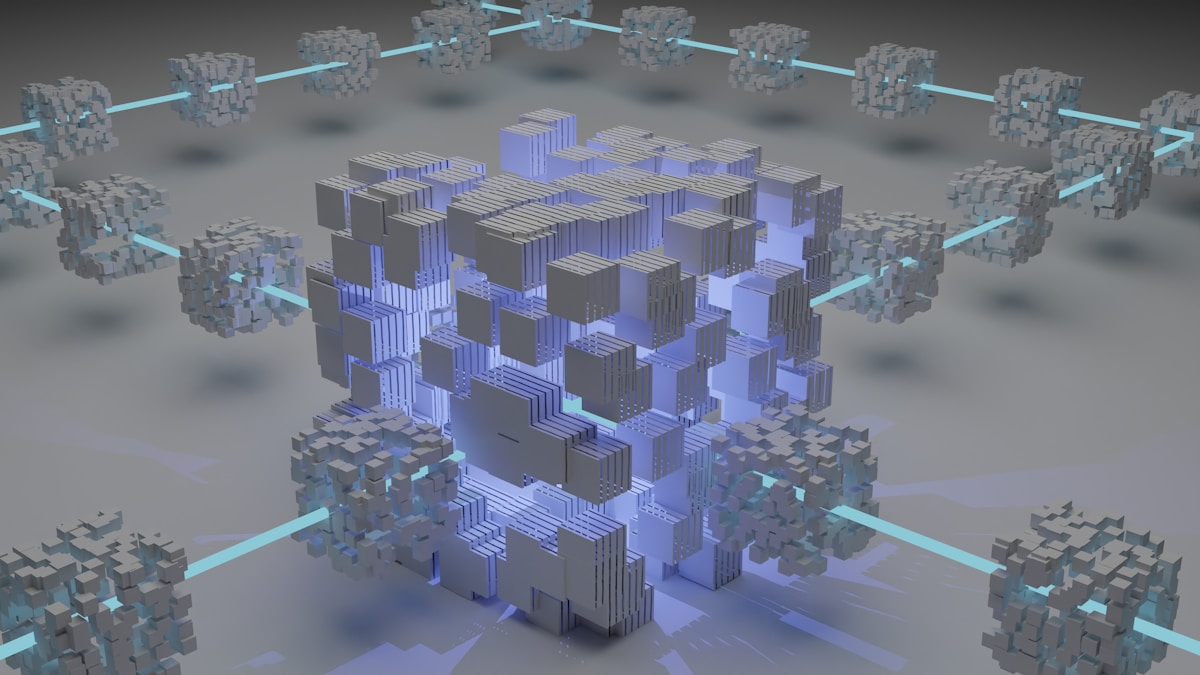

Real estate, bonds, private equity — all being tokenized on blockchain in 2026 — Photo: Unsplash
Real World Asset Tokenization in 2026: The $16 Trillion Opportunity Quietly Building on Blockchain
Real world asset (RWA) tokenization is the most important development in blockchain finance that most retail crypto investors haven't noticed — because it's happening in institutional boardrooms, not on Twitter. BlackRock, Franklin Templeton, JPMorgan, and Citi are moving billions onto blockchains. The addressable market is the entire global financial system — estimated at $16 trillion in the near term.
What Is Real World Asset Tokenization?
RWA tokenization converts ownership rights to traditional financial assets — real estate, government bonds, private equity, commodities, money market funds — into digital tokens on a blockchain. Each token represents a verifiable claim to the underlying asset.
Fractional property ownership — invest $100 in a Manhattan building instead of $5M minimum
Tokenized T-bills settling in seconds globally, 24/7 — BlackRock BUIDL, Franklin Templeton BENJI
$1.5T private credit market accessible to DeFi protocols via tokenization — Maple Finance, Goldfinch
Gold, oil, and agricultural commodities represented as blockchain tokens — PAX Gold (PAXG) is live
📊 RWA On-Chain Growth — 2022 to 2026
Major RWA Projects Active in 2026
| Project | Asset Type | Chain | AUM / Size |
|---|---|---|---|
| BlackRock BUIDL | Tokenized money market fund | Ethereum | $2B+ |
| Franklin Templeton BENJI | Tokenized US government fund | Polygon/Stellar | $450M+ |
| Ondo Finance | Tokenized US Treasuries (OUSG) | Ethereum/Solana | $700M+ |
| Maple Finance | Tokenized private credit | Ethereum/Solana | $200M+ |
| XRPL (Ripple ecosystem) | Multi-asset RWA tokenization | XRP Ledger | $1.5B |
| Centrifuge | Tokenized real-world loans | Ethereum/Polkadot | $500M+ |
| PAX Gold (PAXG) | Tokenized gold (1 oz/token) | Ethereum | $800M+ |
❓ FAQ — Real World Asset Tokenization 2026
RWA tokenization converts ownership rights to traditional assets (real estate, bonds, commodities, private equity) into blockchain tokens. Each token represents a verifiable, programmable claim to the underlying asset. Settlement happens in seconds versus days for traditional systems, with 24/7 global accessibility and programmable compliance built into the token itself.
Total on-chain RWA exceeded $15 billion by June 2026, up from approximately $5 billion in early 2025. Key projects: BlackRock BUIDL ($2B+), XRPL ecosystem ($1.5B), Ondo Finance ($700M+), PAX Gold ($800M+), Franklin Templeton BENJI ($450M+). This represents less than 0.1% of the $16+ trillion addressable market — showing both how early this is and how large the growth runway remains.
BlackRock BUIDL (USD Institutional Digital Liquidity Fund) is a tokenized money market fund that runs on Ethereum. Each BUIDL token represents a share in a portfolio of US Treasury bills and cash. Institutions can hold BUIDL for yield, use it as collateral, and settle in seconds instead of the typical T+2 (2-day settlement). As of 2026, BUIDL has over $2 billion in assets — the largest tokenized fund globally.
Ethereum leads in total RWA value due to BlackRock BUIDL and Ondo Finance. XRP Ledger is growing rapidly ($1.5B in RWA) with institutional banking relationships giving it a strong cross-border settlement advantage. Solana is emerging as an option for lower-cost, higher-frequency RWA transactions. Polygon and Stellar serve specific institutional niches. Ethereum's security and institutional trust currently make it the default choice for largest ticket RWA tokenizations.
Some products are accessible to retail: PAX Gold (PAXG) is a tokenized gold coin trading on major exchanges at spot gold price. Centrifuge's Tinlake pools allow DeFi access to real-world loan returns. However, most major RWA products (BlackRock BUIDL, Franklin Templeton BENJI) are restricted to accredited/institutional investors due to securities regulations. The CLARITY Act could create pathways for broader retail access.
Key benefits: (1) 24/7 settlement — no banking hours or holidays, (2) Fractional ownership — $100 minimum instead of $1M+, (3) Global accessibility — anyone globally can access US Treasury yield without a US bank account, (4) Programmable compliance — KYC/AML built into the token itself, (5) Faster settlement — seconds vs. 2-5 business days, (6) Transparency — on-chain proof of reserves and holdings.
Key risks: (1) Smart contract risk — if the blockchain code has bugs, the asset representation could be compromised, (2) Legal enforceability — tokenized ownership is only as good as the legal framework recognizing blockchain-based claims, (3) Issuer risk — if BlackRock or Circle fails, even "backed" tokens could be affected, (4) Oracle risk — for assets requiring off-chain price data, oracle failures can create mispricing, (5) Regulatory changes — new laws could affect the validity of tokenized ownership claims.
RWA creates sustainable demand for blockchains used as settlement infrastructure (Ethereum, XRP Ledger, Solana). Unlike speculative crypto demand, RWA settlement fee demand is predictable and grows with asset under management. As $16 trillion in global assets gradually tokenizes, the blockchains hosting those assets collect fees continuously. This creates a "institutional floor" under blockchain valuations separate from speculative crypto cycles.
Ondo Finance tokenizes US Treasuries and money market funds as on-chain assets (OUSG, USDY). DeFi protocols use Ondo products as yield-bearing collateral — the "risk-free rate" for DeFi. With $700M+ in AUM and growing institutional partnerships, it's a real product. The ONDO token is the governance token. Whether the token captures sufficient value from protocol success is the investment question — not guaranteed regardless of product success. Not financial advice.
Estimates from major institutions: McKinsey projects $2 trillion in tokenized assets by 2030. Boston Consulting Group estimates $16 trillion by 2030 including real estate. Citigroup projected up to $4 trillion specifically in tokenized financial securities. The wide range reflects uncertainty about regulatory progress and institutional adoption speed. The current $15B represents approximately 0.1% of even the conservative estimates — massive runway ahead.
Bottom Line — RWA Tokenization 2026
⚠️ Disclaimer: Not financial advice. RWA tokenization involves regulatory and technological risks. Always conduct your own research.